.svg)
.svg)
What we'd do if it were our money
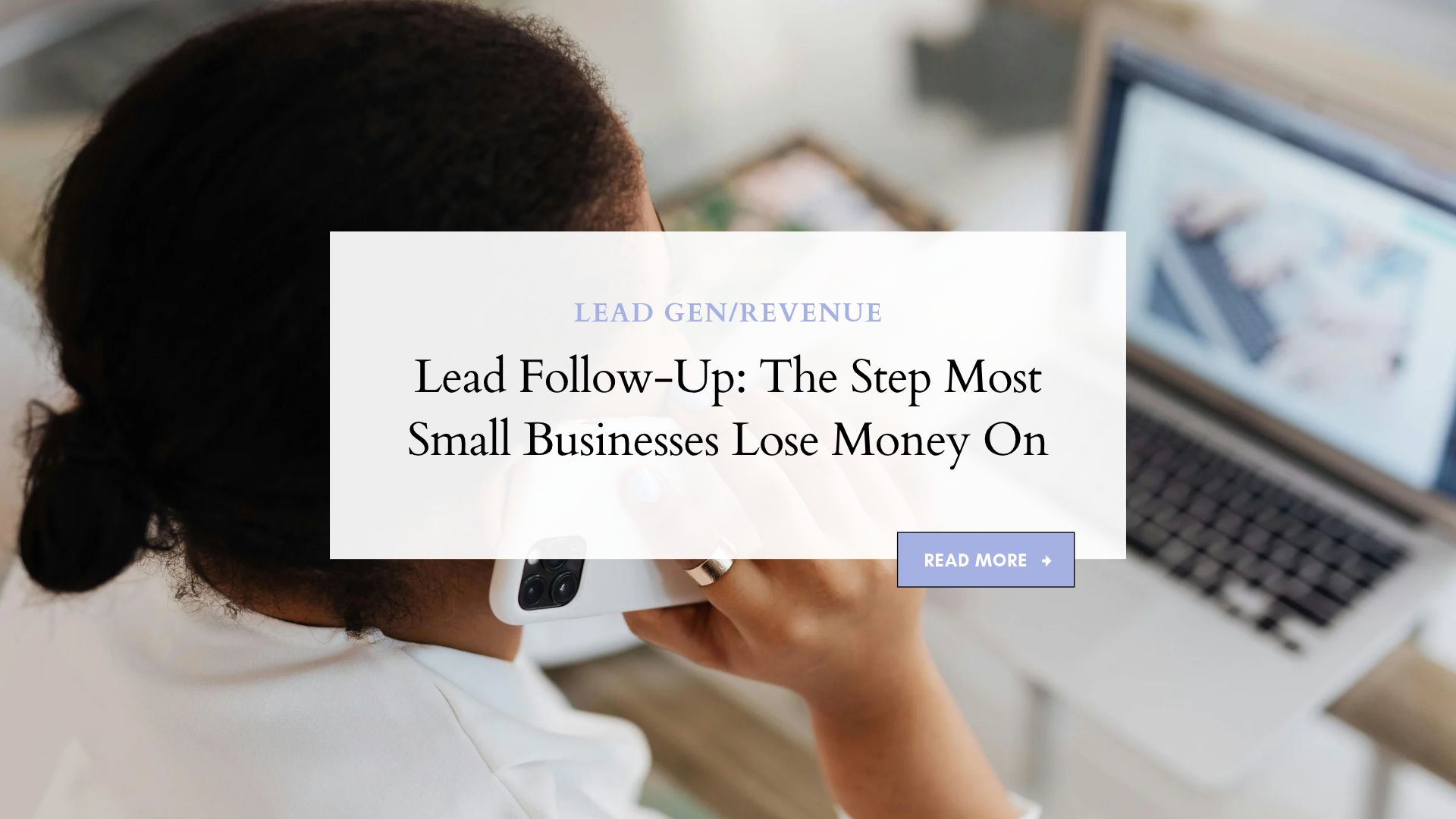
Lead Follow-Up: The Step Most Small Businesses Lose Money On
Lead follow-up is how quickly and consistently you respond to people who reach out about your business. It's where most small businesses lose money, because leads go cold fast and most owners reply too slowly, too few times, or not at all.
The reality is many small businesses don't have a lead problem. They have a follow-up problem. They pay for ads, posts, and SEO to make the phone ring, then let the inquiry sit until the customer has already hired someone else.
Quick answer: how to fix lead follow-up
- Respond to every new lead within an hour, ideally within minutes
- Follow up multiple times over 30 days, not once
- Use more than one channel: call, text, and email
- Assign one person to own every lead until it's closed or lost
- Track response time and conversion rate every month
The math: what slow follow-up actually costs
The research on this is old, but the pattern hasn't changed. In a Harvard Business Review audit of 2,241 U.S. companies, only 37% responded to an online lead within an hour, 23% never responded at all, and the average response time among those that did reply was 42 hours. A related analysis of over a million leads found that companies contacting a lead within an hour were nearly seven times as likely to qualify it as those who waited even one more hour.
Now run your own numbers. Here's a simple example:
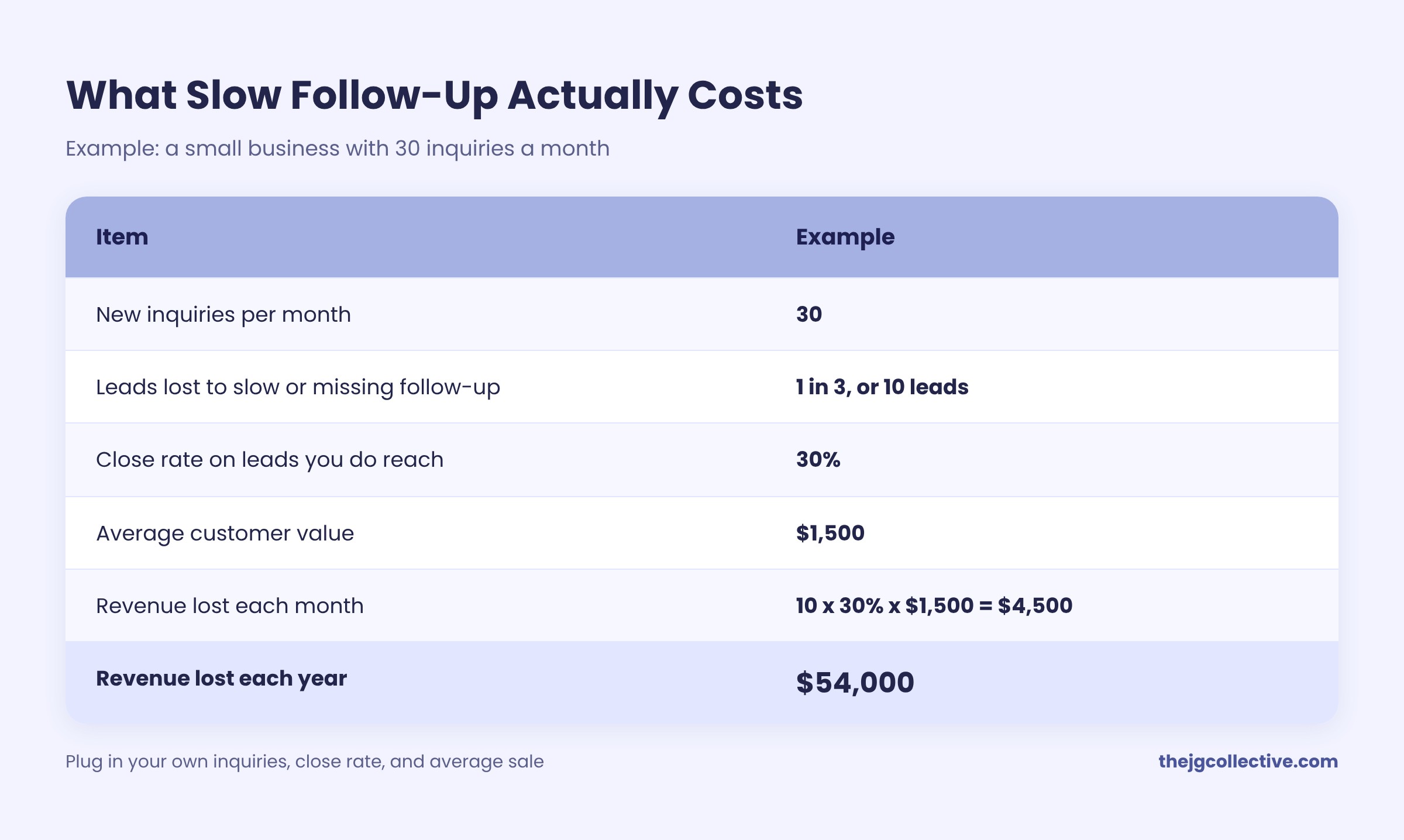
That's money you already paid marketing to generate. Most teams miss this: fixing follow-up is usually cheaper and faster than buying more leads.
Plug in your own inquiry count, close rate, and average sale to see what the leak costs you.
Why follow-up breaks down in small businesses
Nobody decides to ignore leads. Follow-up fails because there's no system behind it.
- Leads arrive in too many places. Website forms, Instagram DMs, Facebook messages, Google calls, emails, and texts, with no single place to see them all.
- The owner is doing the work. When you're on a job site or with a client, the inquiry waits until tonight, or next week.
- One attempt feels like enough. One unanswered call or email, and the lead gets written off as "not serious."
- Nobody owns it. When everyone can follow up, no one does.
- No reminders. Without a CRM or even a simple tracker, warm leads disappear into an inbox.
The fix isn't working harder. It's building a follow-up system that runs even when you're busy.
The follow-up system: four parts
1. Speed: respond within the hour
The first reply matters most. Set a rule that every new lead gets a response within one hour during business hours, and first thing the next morning for after-hours inquiries.
If you can't call right away, send an instant auto-reply by text or email that confirms you got the message and says when you'll reach out. It buys time and shows the lead they weren't ignored.
2. Cadence: follow up more than once
People are busy, not uninterested. A missed call or unopened email rarely means no. Plan a sequence of touches over 30 days, spaced further apart as time goes on. The cadence below gives you a starting point.
3. Channels: meet them where they reached out
Reply first on the channel the lead used, then add others. Someone who sent an Instagram DM may never check email. Rotate between call, text, and email, and respond in the language they wrote in. A Spanish inquiry answered in English is a lead you're likely to lose.
4. Ownership: one person, one place
Pick one person to own every lead from first reply to closed or lost. Route every inquiry into one place, whether that's a CRM like HubSpot or a simple shared spreadsheet. Each lead needs a status, a next step, and a date.
A 30-day follow-up cadence
Seven touches over a month, then a monthly check-in until they buy or opt out.
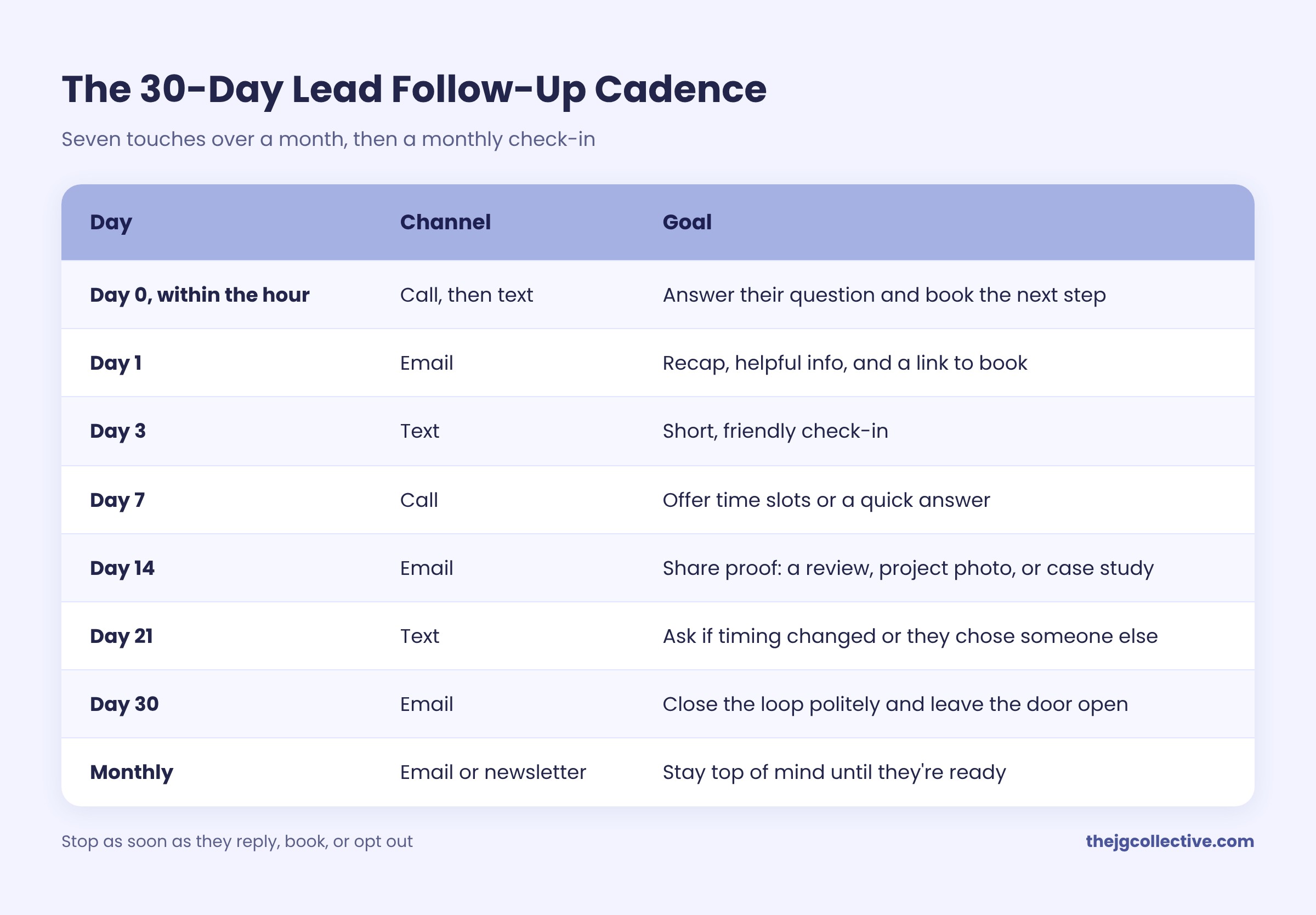
Stop the sequence as soon as they reply, book, or ask you to stop. Adjust the spacing to your sales cycle: a restaurant inquiry might need two days, a remodel might need three months.
Copy-and-paste follow-up messages
Keep every message short, personal, and focused on one next step.
Instant auto-reply (text or email)
Hi [Name], thanks for reaching out to [Business]! We got your message about [service] and will call you by [time]. If it's easier, reply here with a good time to talk.
Day 3 text
Hi [Name], it's [Your name] from [Business]. Just checking in on your [service] question. Want me to hold a time for you this week?
Day 14 email
Subject: A project like yours
Hi [Name], I thought you'd like to see a recent [project type] we finished in [City]. [Photo or link] If you're still planning yours, I'm happy to walk you through options and pricing. Here's my calendar: [link]
Day 30 break-up email
Subject: Should I close your file?
Hi [Name], I haven't heard back, so I'll assume the timing isn't right. No problem at all. If anything changes, just reply to this email and we'll pick up where we left off.
Don't skip the day 30 message. It tends to get replies the earlier touches didn't. It's direct, low pressure, and gives people an easy way to say yes, not yet, or no thanks.
How to measure your follow-up
Track four numbers every month:

The metric anchor: if response time drops and lead-to-customer rate rises, your follow-up is paying for itself. Compare 90 days before and after you put the system in place.
Frequently asked questions
How fast should a small business respond to a new lead?
Within one hour during business hours, and ideally within minutes. Research from Harvard Business Review found that companies contacting leads within an hour were nearly seven times as likely to qualify them as those that waited longer.
How many times should you follow up with a lead?
Plan for about seven touches over 30 days across call, text, and email, then a monthly check-in. Stop as soon as the lead replies, books, or asks you to stop.
What is the best way to follow up with a lead?
Reply first on the channel the lead used, then add calls, texts, and emails. Keep each message short, personal, and focused on one next step, such as booking a call.
Why do small businesses lose leads?
Most lose leads because inquiries arrive in too many places, the owner is too busy to respond quickly, no one owns follow-up, and one unanswered attempt gets treated as a no.
Do I need a CRM for lead follow-up?
Not to start. A shared spreadsheet with each lead's status, next step, and date works. A CRM helps once volume grows by adding reminders, automation, and reporting.
What should a follow-up message say?
Remind them who you are, reference what they asked about, add something useful such as a photo, review, or answer, and end with one clear next step.
The bottom line
Every lead you don't follow up on is marketing money you already spent. Before you buy more ads or post more content, fix the step between "someone reached out" and "someone paid you."
Respond within the hour, follow up more than once, use more than one channel, and give one person ownership. That's the whole system, and it's often the highest-return marketing fix a small business can make.
Losing leads you've already paid for? JG Collective builds follow-up and marketing automation systems for Utah small businesses, in English and Spanish, so no inquiry slips through. Book a free consultation and we'll map where your leads are leaking.