
.svg)
.svg)
What we'd do if it were our money
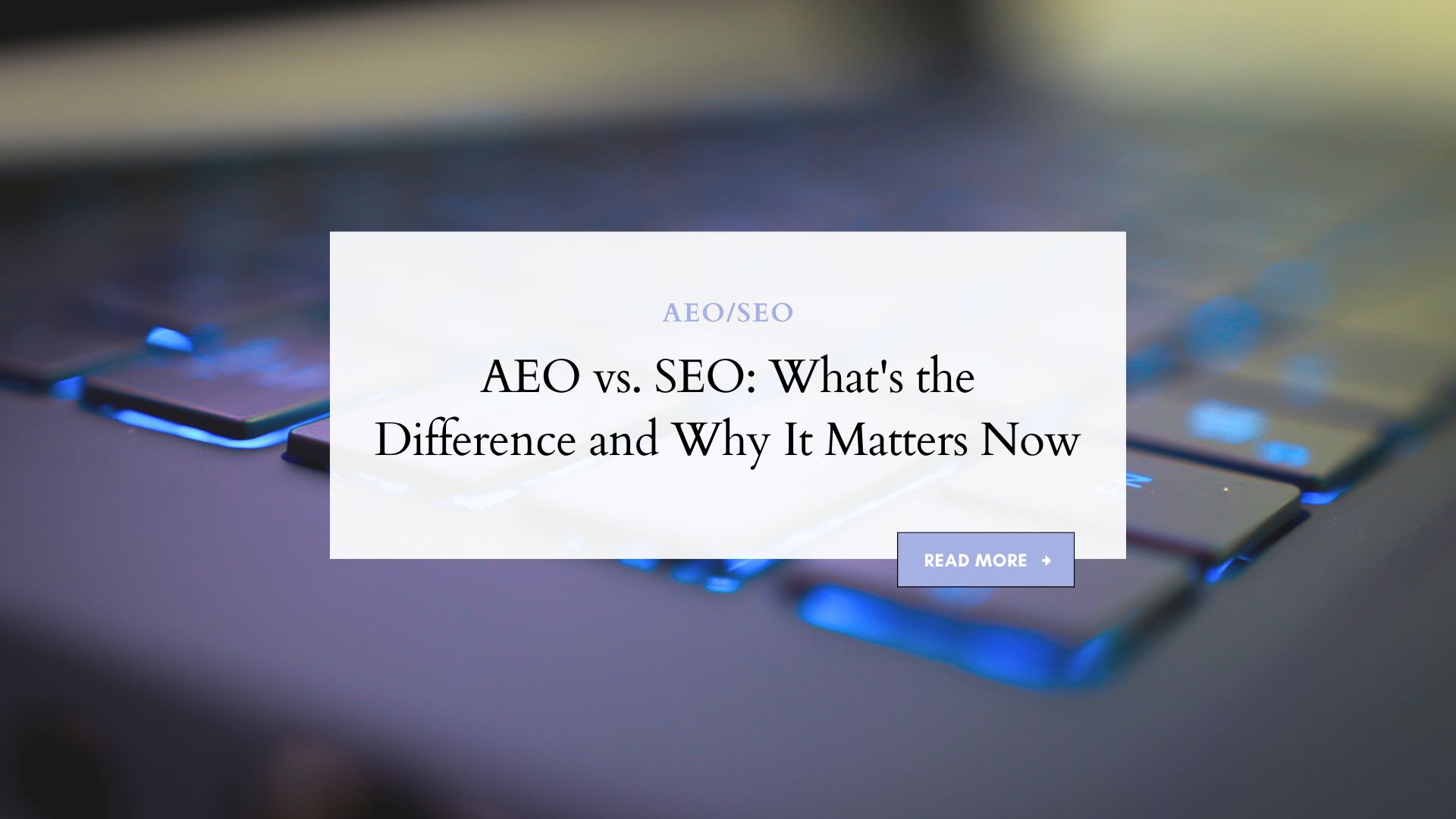
AEO vs. SEO: What's the Difference and Why It Matters Now
Search didn't just get faster. It got smarter. And if your marketing strategy is still built entirely around traditional SEO, you're optimizing for a version of search that's quietly becoming less relevant.
The reality is: two different games are being played right now, and most businesses don't even know the second one exists.
What SEO Actually Is (And What It Was Built For)
Search Engine Optimization was designed for one purpose: help Google understand your content well enough to rank it when someone types a query.
The playbook has always been the same. Find keywords. Build pages around them. Earn backlinks. Improve technical health. Repeat.
That system still works. Google still owns roughly 78% of all digital queries. Ranking on page one still drives real traffic and real revenue. SEO is not dead.
But SEO was built for a world where search ends with a list of blue links, and a person chooses which one to click. That world is shrinking.
What AEO Is and Why It's Different
Answer Engine Optimization is the practice of structuring your content so AI-powered systems can extract it, understand it, and surface it as a direct answer, without requiring a click.
When someone asks ChatGPT how to lower their cost per lead, it doesn't show them ten links and let them choose. It synthesizes an answer. When someone asks Perplexity which marketing agency to hire, it pulls from sources it's already decided to trust. When Google's AI Overview answers a question before you ever scroll, it's doing the same thing.
AEO is about being the source those systems pull from.
The difference in intent is significant. SEO asks: how do I get someone to visit my page? AEO asks: how do I become the answer, regardless of whether they visit at all?
Why Both Matter Right Now
Here's where most teams make the mistake. They treat AEO as a replacement for SEO rather than an expansion of it.
The brands winning in 2026 are doing both, because the audiences are different. Traditional search still drives purchase intent. Someone Googling "marketing agency Heber City Utah" is ready to hire. You want to rank for that.
But AI-assisted search is where discovery and trust-building are increasingly happening. Someone asking ChatGPT "what should I look for in a marketing agency" isn't searching, they're researching. Being cited there builds authority before that person ever runs a traditional search.
Most teams miss this. They optimize for the click and ignore the conversation happening upstream.
What AEO Optimization Actually Looks Like
The tactical shift is smaller than most people expect.
Write for questions, not just keywords. AEO systems are built around natural language queries. Content structured around how people actually ask questions, not just what they type into a search bar, performs significantly better in AI-generated answers.
Lead with the answer. AI systems scan for clear, direct responses. If your content buries the answer in paragraph six, it gets skipped. State the core answer first. Elaborate after.
Build structured content. Headers, concise paragraphs, FAQ sections, and schema markup all make it easier for AI systems to parse and extract your content. Ambiguous structure gets passed over for something cleaner.
Establish consistent entity clarity. AI search doesn't just evaluate individual pages, it evaluates your entire digital footprint. Consistent messaging across your website, social profiles, and third-party mentions signals that you're a credible, well-defined entity worth citing.
Earn citations, not just backlinks. Traditional SEO values links. AEO values being mentioned and referenced across authoritative sources. PR, thought leadership, guest content, and strategic partnerships all feed the AEO engine.
The Metric Shift You Need to Prepare For
If you optimize for AEO and it works, your traffic numbers might not reflect it immediately. That's not a failure. That's the new reality of zero-click search.
Visibility in AI-generated answers, brand mentions across AI platforms, and downstream branded search volume are the signals that matter. Someone gets an answer from ChatGPT that includes your agency's name. They don't click. But two days later, they Google you directly. That conversion path doesn't show up cleanly in traditional attribution, and most teams aren't tracking it yet.
The businesses that build measurement frameworks around this now will have a significant advantage over the ones scrambling to understand it in 2027.
The Operator's Take
SEO gives you traffic. AEO gives you authority. You need both, but the weight you put on each depends on where your buyer is in the decision process.
For most businesses, the right move right now is to keep executing traditional SEO fundamentals while layering AEO practices into every new piece of content you create. The investment is minimal. The compounding effect over the next 12 to 24 months is not.
Search is not going away. It's expanding. The question is whether your content is built for where it's going, or only for where it's been.
JG Collective helps businesses build marketing systems that perform across every channel, including the ones that didn't exist two years ago. If your search strategy needs a second look, let's talk.
.webp)
.webp)